

What Is MCP and Why Is It Useful in SEO?

Sille Christensen
April 8, 2026
A Model Context Protocol (MCP) connects AI models to external tools. Learn how MCP works and why it is helpful in SEO.
What Is Model Context Protocol (MCP)?
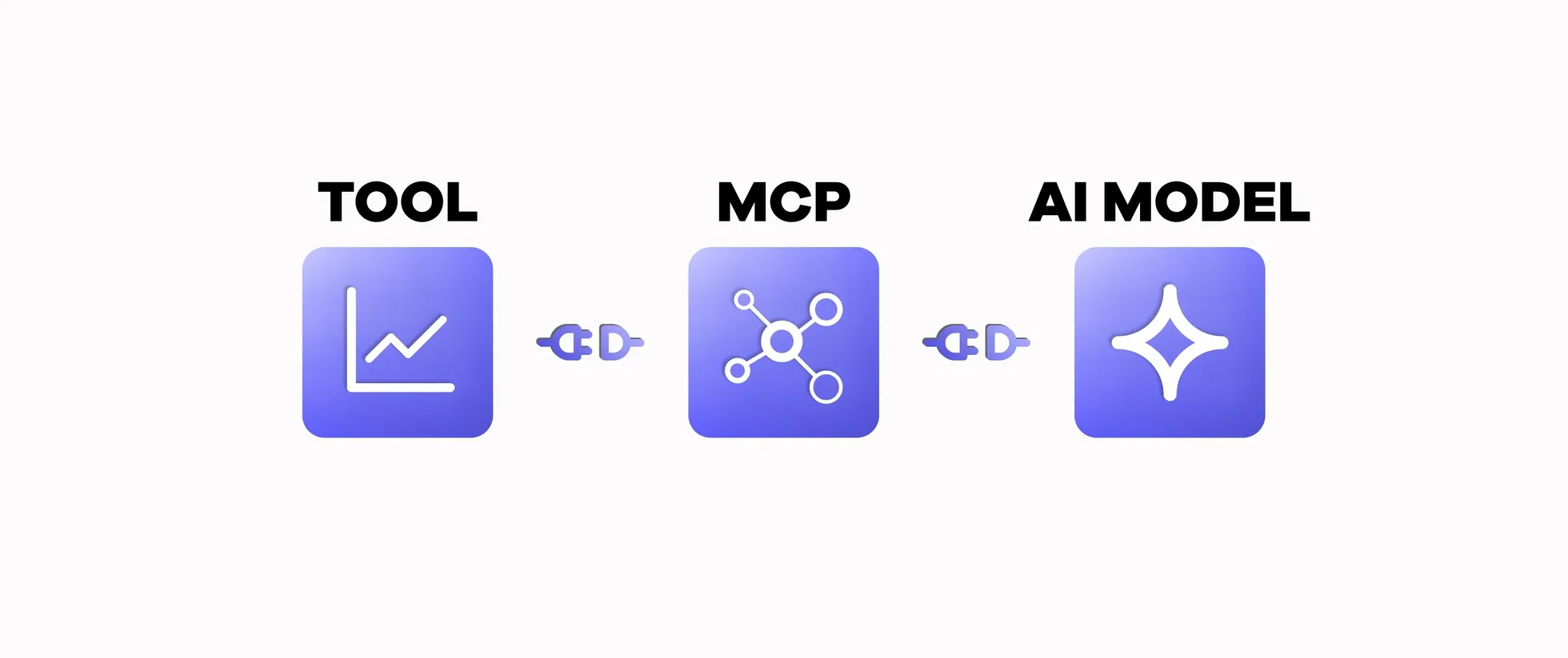
Model Context Protocol (MCP) connects AI models to external tools and data sources, such as your rank tracker, analytics platforms, or reporting tools. The MCP server turns your data into something AI assistants can read and use in their answers. This way, AI tools like ChatGPT or Claude can work with your actual data in real time.
In SEO, your AI tool can look at your keyword rankings, analyze performance trends, and help you identify content gaps without you having to prepare and analyze the data first. However, the MCP does not replace the tools you already rely on. You still need platforms to collect accurate data, but the MCP simply makes that data easier and faster to use.
How MCP Works (without the technical gibberish)
Most explanations of MCP quickly get technical. That is not helpful when you just want to understand what it actually does in your daily work. So let us keep it simple.
Imagine you are sitting on your couch watching TV after a long, exhausting day at work. You have finally found the perfect spot, all cuddled up in a warm blanket and ready to relax. Your favorite TV show ends, and now you need to change the channel. But there is one problem. You do not have a remote control.
So you get up, walk over to the TV, press the buttons, and sit back down. A few minutes later, you want to adjust the volume. You get up again. Then again to change the channel. Now, imagine having a remote control. This is what the MCP does for you. Instead of moving between tabs and tools to find the right insights, all your data is within reach. You can stay where you are and control everything from there.
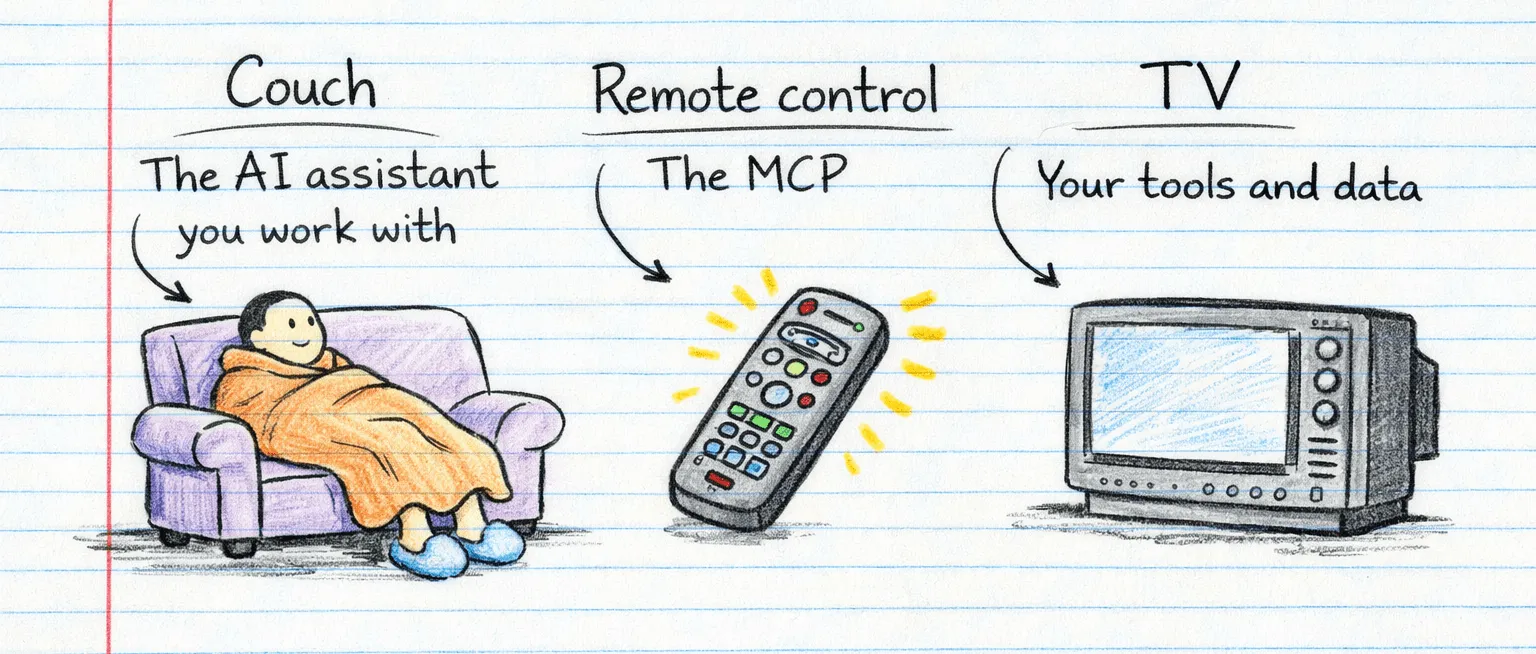
Thus, in SEO, an MCP is a direct connection between your AI assistant and your SEO tool. Without MCP, your workflow usually involves manually exporting data, opening spreadsheets and dashboards, and switching between different tools and tabs. It works, but it is slow and often repetitive.
With an MCP, you skip those steps. You ask a question, and the AI model pulls data directly from your tool to answer it. Here is how easy it actually is to use an MCP:
- You connect your tool to the AI assistant.
- The MCP creates a secure bridge between the tool and your AI assistant.
- You start asking your AI questions in plain language.
- The AI model retrieves the relevant data from your tool.
- The AI gives you an answer based on your actual performance data.
For example, instead of manually analyzing, you can ask which keywords dropped in rankings the past week and what you should look at first. The MCP does not give you new data or change it — it helps you use the data you already have, but much faster.
Why MCP Matters for SEO
Let us bring this into a real scenario. In your daily SEO work, you spend time switching between tools and compiling data to decide your next steps. This is where the MCP comes in handy. It removes the natural border between where your data lives and where you need to use it.
You do not have to compile data across platforms manually, and you can analyze your data in real time inside the AI tool you already use. In essence, the MCP simplifies your workflow, does not disrupt your work, and helps you stay in the zone.
Key MCP Use Cases for SEO Teams
MCP becomes valuable when you apply it to the work you already do. In your SEO work, you can connect the MCP to your AI tool to:
- Analyze ranking changes across large keyword sets and quickly identify which keywords are driving gains or losses.
- Get summaries of real-time SERP insights, including SERP features, ranks, pixel position, and visibility trends for your keywords.
- Identify content gaps based on real-time data and uncover high-value queries you are not targeting.
- Compare your performance against competitors by analyzing who is gaining visibility, where they outrank you, and which pages drive their results.
- Build client-ready reports faster and spend more time explaining insights instead of preparing them.
The use cases depend on which data points are available in your tool. However, across these use cases, the pattern is the same. You remove manual steps and get to answers faster. The MCP improves your analysis and reporting efficiency while eliminating inefficient work processes.
However, MCP is not a magic solution. You still need access to reliable data because the quality of the AI answers will always depend on the quality of your data. If the data quality is poor, the output will be too. Also, the AI tool does not replace your critical thinking and knowledge. It helps you move faster, but you still need to evaluate the output and decide which actions to take.
The Future of SEO Workflows with MCP
MCP in SEO allows you to spend less time gathering data and more time acting on insights. Your AI becomes an operational assistant rather than a tool you use occasionally to spit out content. You still ned accurate data and the right tools, but the MCP helps you improve how you do SEO by making your data easier to access and faster to use.
In the constantly changing world of SEO, your competitive advantage lies in acting on data quickly. That is exactly what the MCP allows you to do, and that is what makes the difference.
Related blog posts

The Hidden Flaws in Search Volumes and How to Solve Them
Learn how AI Search Volume delivers reliable search volumes by combining GKP, GSC, and Trends so that you can prioritize the right keywords.
30 March 2026
6 Ways AccuRanker Scales with You
If your SEO tool does not scale with you, it slows you down. Here are six ways AccuRanker scales with agency and enterprise SEO teams.
24 March 2026
Why You Need Both LLM and Rank Tracking
Learn why SEOs need both rank tracking and LLM tracking to measure and understand their visibility across SERPs and AI answers.
12 March 2026