

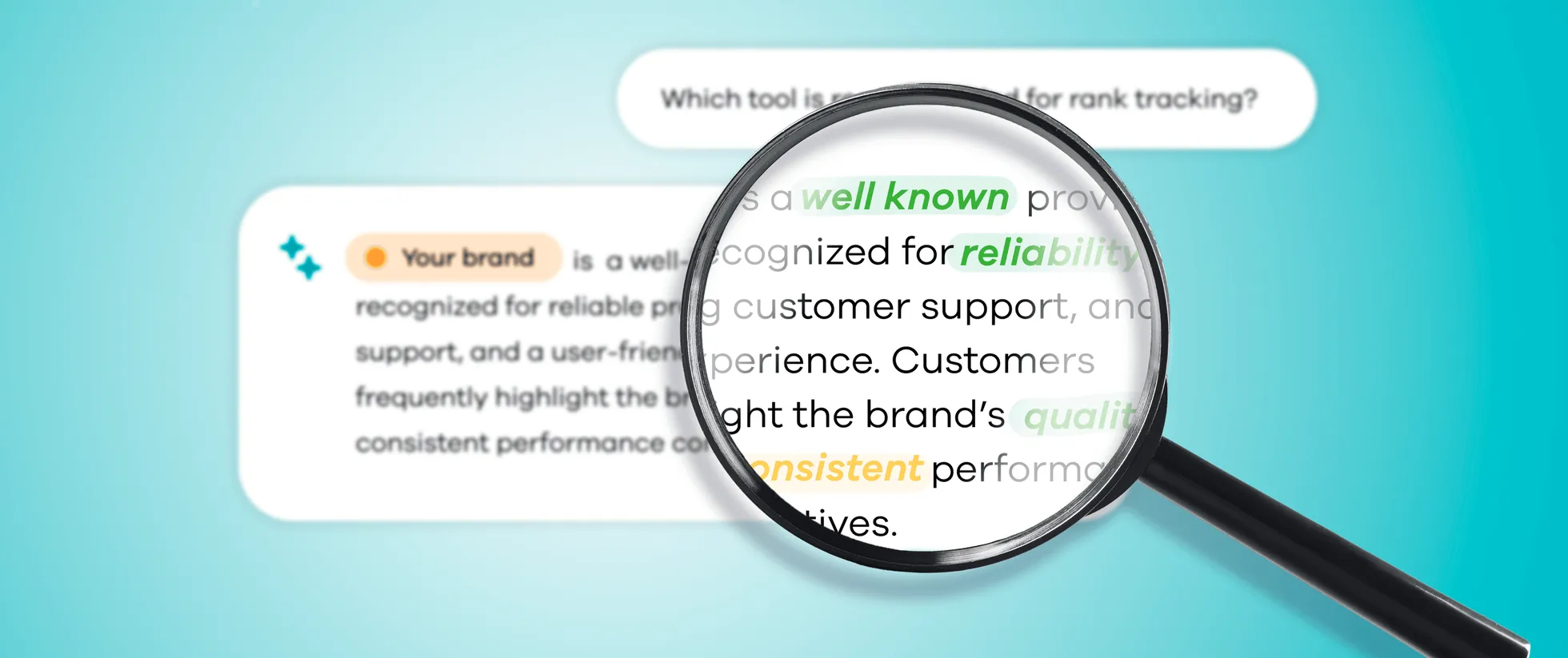
How to Analyze Your Brand Mention in AI Responses

Sille Christensen
June 18, 2026
Being mentioned in AI responses is only the beginning. We give you 6 factors to consider when analyzing your brand mentions and AI visibility.
You type a prompt into ChatGPT. Your brand appears in the answer — success! But then you read the response. The AI assistant introduces your competitor first and gives another competitor a detailed explanation. Your brand is mentioned halfway down the answer, with a short, generic description.
And suddenly, showing up no longer feels like much of a victory. You are visible, yes, but would anyone actually choose you after reading the answer? That is the difference most teams miss, and why analyzing your brand mentions in AI responses is so important.
Because knowing if you show up is not enough — you also need to know how you show up. We will tell you exactly how to do that.
What Most SEOs Get Wrong about AI Visibility
One of the easiest mistakes to make is treating AI visibility like rankings: you either show up or you do not. But AI responses are narratives, not rankings. Depending on the prompt, the AI assistant describes, compares, and subtly guides users toward a particular direction.
That is why visibility alone can mislead you. If you ignore how the AI assistant positions and frames your brand, you are simply tracking presence rather than the quality and potential influence of your mention.
The Factors that Define Your Brand Mention
Before diving into the analysis, stop thinking like an SEO for a moment. Read the answer as a potential customer. Who catches your attention first? Which brand sounds most convincing? Who would you choose if you knew nothing about the brands mentioned?
After that, you are now ready to analyze your position, level of detail, framing, sentiment, authority, and exclusions in the response.
Position: Where do you show up?
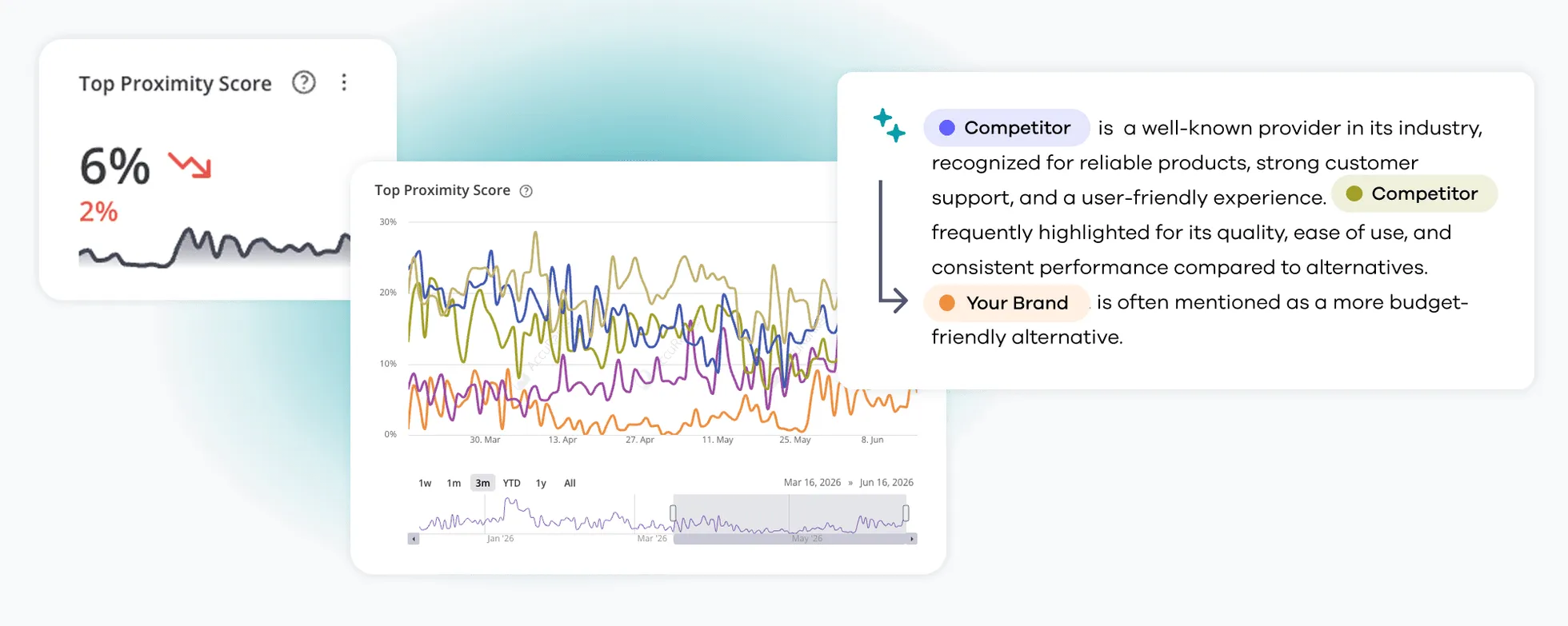
The first thing to look at is where you appear in the answer. Brands introduced first naturally receive more attention and often become the benchmark for everything that follows. Think of it as joining a conversation halfway through. Everyone else has already had a chance to introduce themselves, while you are still waiting for your turn.
Appearing first does not guarantee success, but if you appear later in the answer, you are playing catch-up. Therefore, you should pay attention to whether your brand always enters the conversation early or arrives after competitors have already framed it.
Level of detail: How much space do you get?
Not all brand mentions are equal. Some brands get a single line, while others get full explanations. Both brands are visible, but only one is memorable. A superficial mention is easy to overlook and does not build authority or influence decisions.
An explanation that covers features, use cases, and benefits gives users something to evaluate. And the more context your brand gets, the more credible you become. Thus, consider how much context the assistant gives your brand. Are your USPs and benefits clearly explained, or are you just mentioned without explaining why you matter or when users should choose you?
Framing: What role are you given?
AI assistants assign roles to brands, although they try to be as neutral as possible. Are you framed as the leader, a niche tool, a cheaper alternative, or just one option on a list? Those are very different stories. You are competing not only for a mention but also for the most positive narrative.
AI assistants may misposition your brand, regardless of your actual market position, potentially changing how users think of you. That is why framing matters so much. Therefore, look at how the assistant describes your brand relative to others. Are you presented as the obvious choice or as a secondary option?
Sentiment: How does your brand sound?
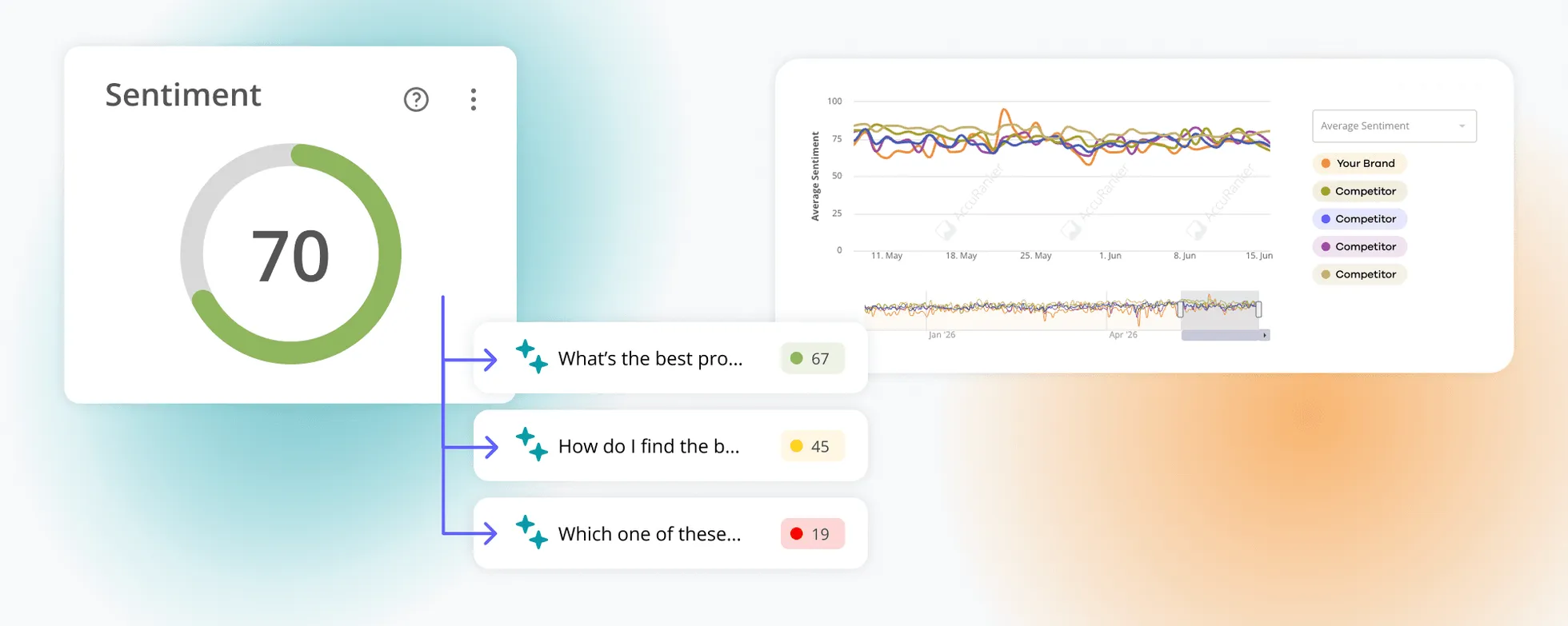
AI assistants’ descriptions of your brand can shape users’ perceptions. Some descriptions sound confident, while others sound generic. Those nuances matter. Here is an example: the assistant describes one brand as “known for accuracy and reliability” and another as “a platform that offers rank tracking.” Neither is negative, but one is definitely more convincing.
Most teams focus on finding negative language. But neutral language can actually be just as damaging. If an AI assistant describes your competitors using more positive, confident language, they will naturally stand out, even if your capabilities are similar. Therefore, focus on the language used around your brand. Does it signal confidence, or does it feel generic?
Authority: Do you look like the safe choice?
When you examine the language, you will notice that some brands receive authority signals while others do not. These short phrases can carry a lot of weight and influence whether users choose you over your competitors. Think of phrases like these:
- “Recognized for delivering reliable rank data.”
- “Known for its speed and accuracy.”
- “Commonly recommended for enterprise SEO.”
- “Frequently mentioned among top rank tracking tools.”
These statements instantly make a brand feel more credible, even though they are not bold claims. And if a brand sounds like the expert in the room, users will start treating it as one. Therefore, when you analyze the response, look for language cues in the assistant’s description of your brand. Are strong authority signals present for you or only for your competitors?
Exclusions: What is left out?
Sometimes, what the AI assistant does not say about your brand is key. A response might include you and describe you correctly. But if your strengths are missing, the picture becomes incomplete. Imagine your brand is known for speed, data quality, or a feature that clearly differentiates you from competitors. Now imagine none of those things appear in the answer.
In AI responses, you are only as strong as the story the AI assistant tells about you. And sometimes, the missing pieces are what cost you the most. Because users compare what is said, not what is missing. Therefore, find out what is missing from the response. Are your core strengths or differentiators included in the description?
Finding Your Brand Is Only the Beginning
Getting a brand mention in an AI response feels like a win — and it should. But that is where the analysis starts, not where it ends. Next time you analyze a response, look beyond the mention itself. Pay attention to where your brand appears, how much attention you receive, and how the AI assistant frames you.
Being mentioned in an AI response is not the finish line. The real goal is to ensure your mention gives users a compelling reason to choose you over your competitors.
Related blog posts

Track Your LLM Performance with AccuLLM
You can now track ChatGPT, Perplexity, AI Overview, and AI Mode with AccuLLM. Learn how we help you monitor your LLM performance.
20 October 2025
How to Find the Best Prompts to Track for AI Visibility
Do you want to start tracking prompts to optimize your AI visibility? We give you seven practical ways to identify relevant prompts to track in LLMs.
9 November 2025
5 LLM Visibility Metrics You Should Track in 2026
SEO is now both about ranking in search engines and being visible in LLMs. We give you five visibility metrics every SEO should track in 2026.
3 December 2025