

How to Add Keywords
Getting StartedLearn how to add keywords and configure search engines, devices, and locations
After adding a domain to AccuRanker, you can add the keywords you want to track and configure how we should track them.
You can enter keywords manually, use keyword suggestions, or import keywords from Google Search Console or a CSV file. You can then configure settings such as country locale, search engine, device type, location, and SERP preferences.
Step 1
If you have just added a domain, the Add keywords window will appear automatically. You can continue to choose how you want to add your keywords.
If you have already added your domain:
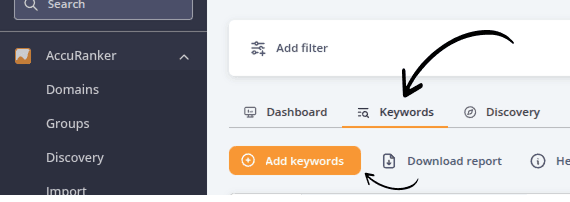
- Open the domain you want to add keywords to.
- Go to the Keywords tab.
- Click Add keywords.
Step 2
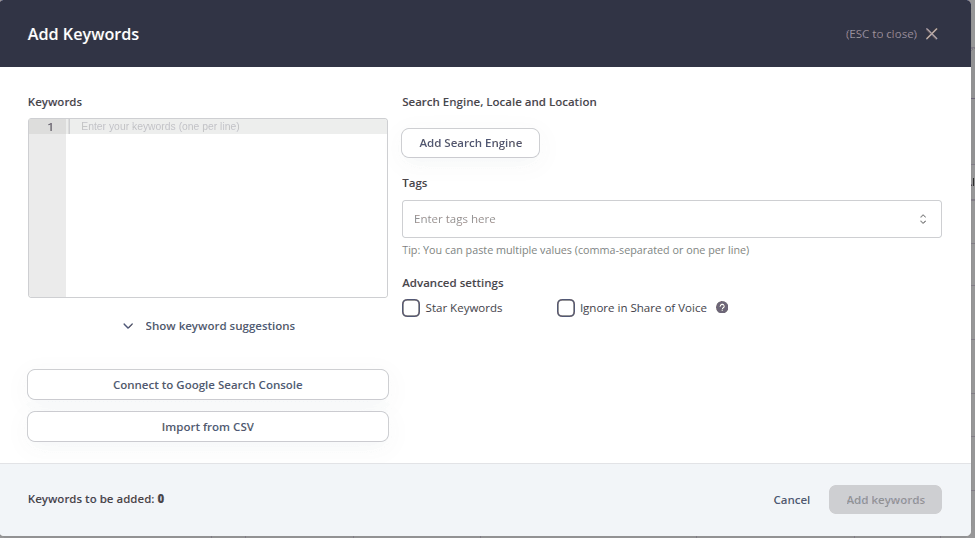
You can add keywords in five ways:
- Enter keywords manually
- Use keyword suggestions
- Use Keyword Discovery
- Import keywords from Google Search Console
- Import keywords from CSV.
If you are not importing keywords from third-party software, we recommend you connect your Google Search Console account to AccuRanker and import keywords directly from your GSC data.
How to Configure Your Keyword Tracking
The options on the right side of the Add keywords window determine how AccuRanker will track the keywords you add.
Country locale
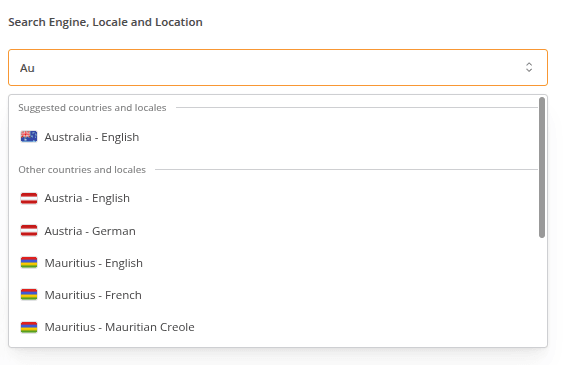
Country locale determines the country where you want to track your keywords. Start typing the country and select it from the list. You can add multiple country locales to track keywords across different countries.
Search Engine and Device Type
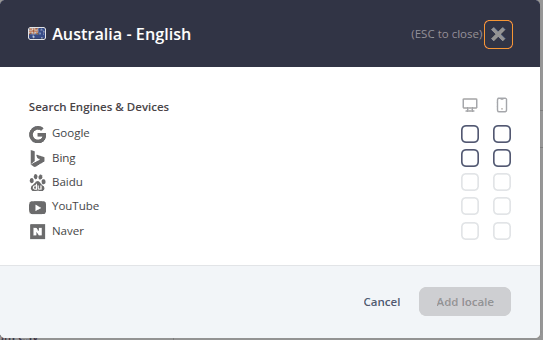
After selecting your country locale, choose the Search Engine and Device Type you want to track. You can track keywords on Google, Bing, Baidu, and YouTube, using desktop and mobile devices. Tracking both desktop and mobile lets you compare rankings across devices.
Location
Use Location to track rankings for a specific geographic area. AccuRanker lets you track performance from the country level down to a specific address, which is useful when monitoring local search performance. You can add as many locations as you want.
Leave the Location field blank if you only want country-level ranking data.
Google Settings
When you select Google as your search engine, additional settings appear below the location.
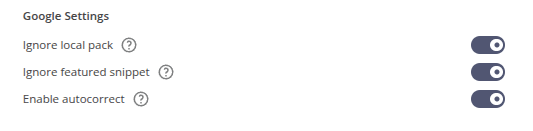
Ignore Local Results
Local results count as rankings by default. Enable Ignore Local Results if you do not want local packs included when AccuRanker calculates your ranking.
When this setting is enabled, AccuRanker ignores the local results and starts counting from the first organic result below them. Therefore, the ranking shown in AccuRanker may differ from the results you see on the SERP.
Ignore Featured Snippets
Featured snippets also count as rankings by default. Enable Ignore Featured Snippets if you want AccuRanker to ignore the featured snippet and start counting rankings from the first organic result instead.
Enable Autocorrect
AccuRanker disables autocorrected results by default. Keeping autocorrect disabled can be useful if, for example, you have a brand name that Google autocorrects.
Tags
Use Tags to organize keywords into categories that match how you analyze your SEO performance.
For example, you can group keywords by campaign, product, or company department. Tagging a set of keywords with a campaign name makes it easier to monitor ranking progress for that campaign.
Learn more about adding tags to your keywords.
Advanced Settings
The Advanced settings give you additional options for organizing keywords, monitoring ranking changes, and controlling which keywords contribute to Share of Voice.
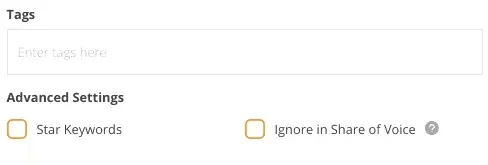
Star Keywords
Star keywords that you want to monitor more closely and get notifications when we detect significant ranking changes and other relevant changes for starred keywords.
Ignore in Share of Voice
Enable Ignore in Share of Voice when you do not want a keyword included in your Share of Voice data.
For example, you may want to exclude branded keywords if you want your Share of Voice to focus on non-branded search visibility.
How Many Keywords Will Be Added?
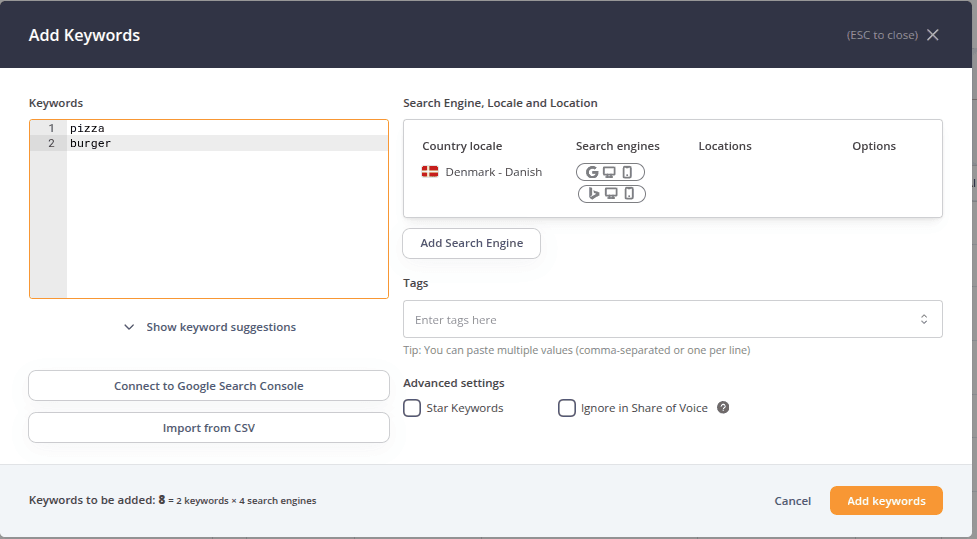
Each keyword counts once for each Country Locale, Search Engine, Device Type, and Location you select for that keyword.
For example, if you enter one keyword and track it on Google for both desktop and mobile in one country locale, it counts as two tracked keywords.
The numbered list on the left side of your keywords shows how many keywords you have entered. The total in the bottom-left corner of the Add keywords window shows how many tracked keywords will actually be added.
Check this total before adding your keywords to make sure it matches the number of keywords you want to track.
Related help guides
How to Import Keywords and Historic Data via CSV
How to Import Keywords from HubSpot
How to Move Keywords to Another Domain
Still need help?
Customer support
Our live support team is ready to assist you with any issues.