


6 Ways AccuRanker Scales with You

Sille Christensen
March 24, 2026
If your SEO tool does not scale with you, it slows you down. Here are six ways AccuRanker scales with agency and enterprise SEO teams.
As an agency or enterprise SEO team, managing SEO across multiple brands and markets can quickly become a logistical nightmare. Every new client adds another dataset. Every new market multiplies the data. Suddenly, you are juggling thousands of keywords or prompts, dashboards, and reports, making your SEO work far more complex than it used to be.
Keeping everything organized and accessible is not always easy, but AccuRanker makes scaling your SEO operations feel like a dream. Here are 6 ways AccuRanker scales with you.
1. Keep Your SEO Data in One Place
Large-scale SEO often means having multiple tools to dig into. One tool for rank tracking. Another for reporting. A third for prompt tracking, and several spreadsheets trying to glue everything together.
But what does that leave you with? Fragmented insights and time wasted jumping between platforms. With AccuRanker, everything lives in one system. You get everything you need to track, analyze, and report on your keyword and prompt performance. This way, you do not have to pay for several subscriptions and spend time learning a new tool.
2. Control Access and Roles across Teams and Clients
When SEO operations grow, so do the teams behind them. Agencies onboard new clients. Enterprises expand into new markets. Suddenly, dozens of people need access to your SEO data, but not everyone should see everything.
Our workspaces keep everything organized. Admins can control which groups and domains each user can access. This way, each user only sees the keywords, prompts, and domains relevant to their work, improving efficiency and security.
With user management, you define a user’s role as either admin, super user, write user, or read user. These roles have different permissions, enabling you to give the right people access to the right data while keeping everything else restricted.
This structure makes it easier to manage growing teams while maintaining control over access and data visibility. As your SEO operations grow, the platform offers unlimited users and projects depending on your plan.
3. Filter Large Keyword and Prompt Sets in Seconds
Sorting through thousands of keywords or prompts makes most SEOs want to pull their hair out. Picture this: You open a list with 65,000 keywords and think, “Great. Where do I even start?” Finding that one insight you need feels like searching for a specific grain of sand on a beach.
Filtering makes it easy to narrow down large datasets and focus on the most relevant data. Our 50+ filters let you search for options like specific SERP features or LLM engines. You can filter on numeric values, such as search volume or sentiment, and choose values that are equal to, lower than, higher than, or between specific numbers.
Want to find prompts with a sentiment of less than 55? Or a keyword with a Share of Voice change that moved up more than 100? A few clicks and keystrokes will get you there, putting that exact grain of sand right in front of you.
If you use a specific filter regularly, you can save it as a segment to quickly access the data you need.
4. Manage Extensive SEO Data without Waiting Forever
Many SEO tools start strong, but struggle once the keyword or prompt count grows. Pages take longer to load, and simple tasks turn into a waiting game. After a while, you end up seeing the loading icon even with your eyes closed. When your dataset reaches hundreds of thousands of keywords or prompts, speed suddenly matters a lot more than it did at the beginning.
AccuRanker handles large keyword and prompt sets while maintaining speed and responsiveness. You can upload and update large datasets without having time to drink two cups of coffee while the system processes your updates.
Our tagging system makes it easy to manage and analyze thousands of keywords and prompts. Set up custom rules to automatically tag and organize your keywords and prompts. This way, you can easily structure your data, ensure consistency, and save time on manual work.
5. Spend Less Time on Reporting
Reporting is one of the most time-consuming parts of SEO, but I bet you did not get into SEO to spend half your week building reports. Without automation, you end up spending hours exporting data, updating dashboards, and preparing reports for clients or internal stakeholders — time you could be spending improving rankings and traffic.
Our reporting capabilities let you create and download reports, regardless of how many keywords or prompts you track. You can create custom templates to tailor the layout and data points to fit your needs, filter out unnecessary data, and present the relevant insights to stakeholders.
Forget about manual reporting and schedule your reports to send out at a given time automatically. This way, you ensure your stakeholders receive timely, consistent updates. You can set up scheduling and frequency to fit your reporting needs.
6. Connect Your SEO Data to Your Tech Stack
Large SEO teams never work in isolation. Your SEO data needs to flow into dashboards and internal systems. Without integrations and API access, your data gets stuck inside individual tools. As a result, you end up stitching data from different platforms together, which slows your reporting and limits your analysis.
Our API lets you retrieve all data points and metrics in AccuRanker and AccuLLM. You get unlimited calls at no additional cost, ensuring you can always access your data when needed.
If you work with large amounts of data that need to be stored, processed, and analyzed, our BigQuery integration is your knight in shining armor. The integration enhances your reporting by giving you deeper insights into keyword and prompt performance. You can access your AccuRanker and AccuLLM data alongside other datasets for faster and more in-depth analysis.
Scaling SEO Requires A Tool That Can Keep Up
Scaling SEO is exciting, but it also brings complexity. If your SEO tool cannot keep up with that growth, the tool becomes a bottleneck. And when that happens, even experienced SEOs can find themselves spending more time fighting their tools than improving their performance.
As your SEO operations grow, the last thing you want is a tool that slows you down. Make sure your tool can keep up with the pace of your SEO ambitions.
Related blog posts

Why You Need Both LLM and Rank Tracking
Learn why SEOs need both rank tracking and LLM tracking to measure and understand their visibility across SERPs and AI answers.
12 March 2026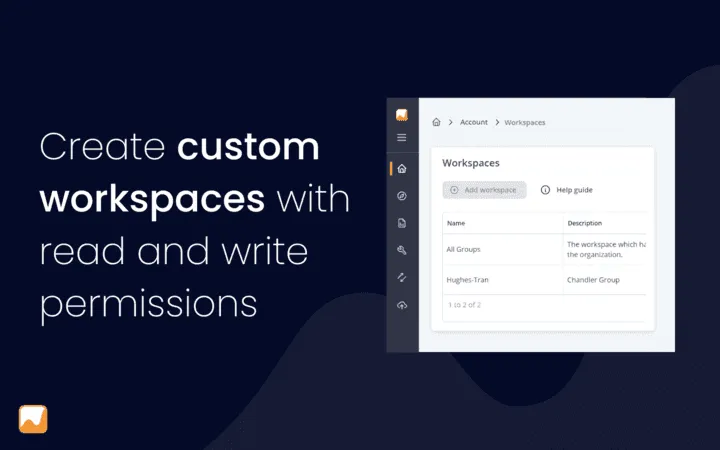
AccuRanker Introduces Workspaces to Empower Access Control
Discover AccuRanker's new Workspaces and Advanced User Management features for enhanced user access control.
11 July 2024
From Setup to First LLM Insights in No Time
If you have not started tracking prompts yet, this is where to begin. We show you how to go from zero setup to first LLM insights in no time.
26 February 2026