

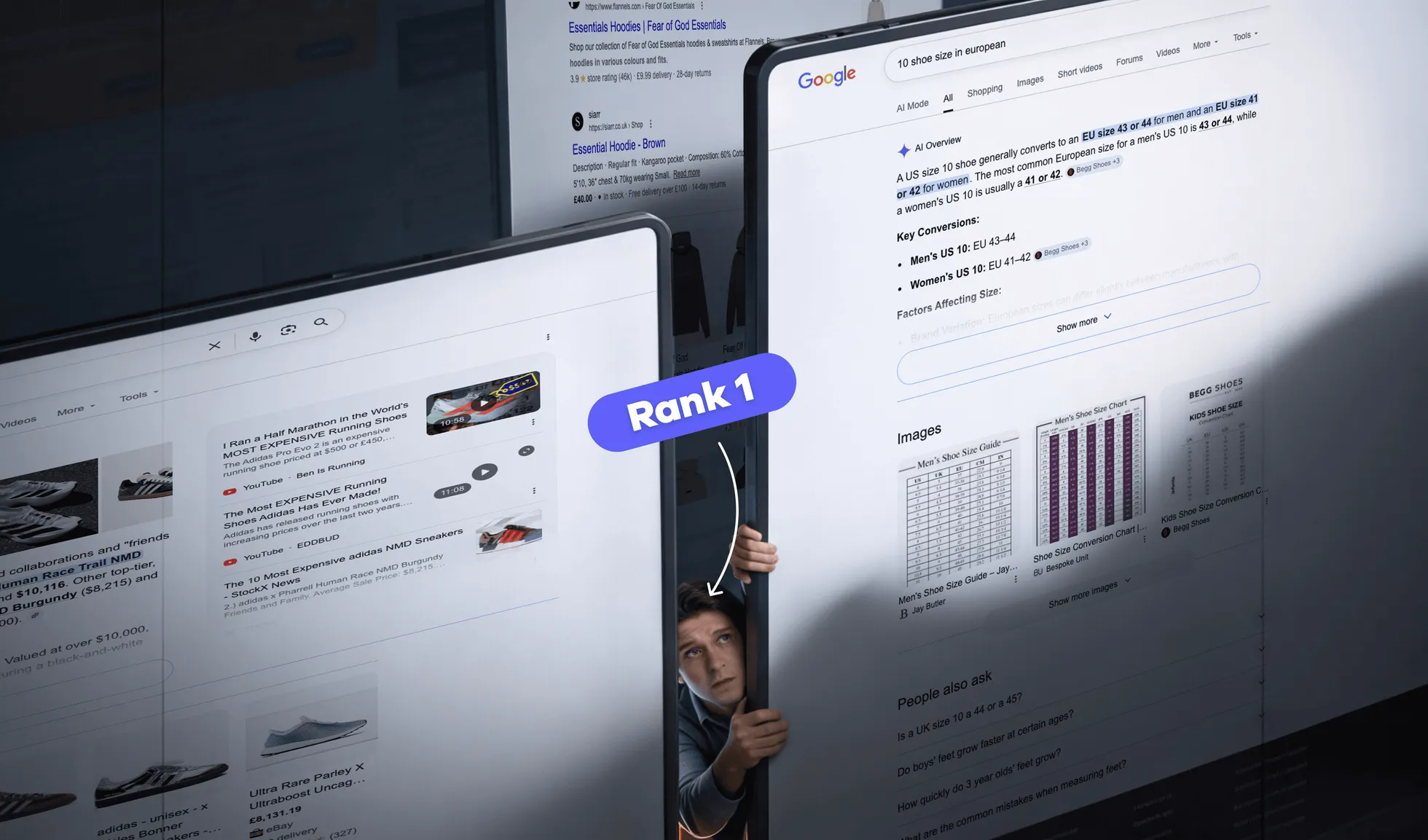
How SERP Layout Is Killing Your Organic Traffic

Sille Christensen
August 13, 2026
Why is your rank 1 not driving traffic? Learn how to measure real SERP visibility with pixel position, SERP feature tracking, and dynamic CTR.
You finally did it. You rank #1 on one of your priority keywords. You take a screenshot and send it to your team with a “we got it” message. Then you check the traffic. Nothing. What?
Welcome to today’s SEO — where you can rank #1 and still feel invisible.
Your ranks are not the problem; the SERP layout is. And no, it is not just AI Overviews. We like to make them the culprit, but they have plenty of accomplices stealing your traffic: ads, featured snippets, shopping results, and the like. Here is how the SERP layout devours your organic clicks.
Four Ways SERP Layout Reduces Your Clicks
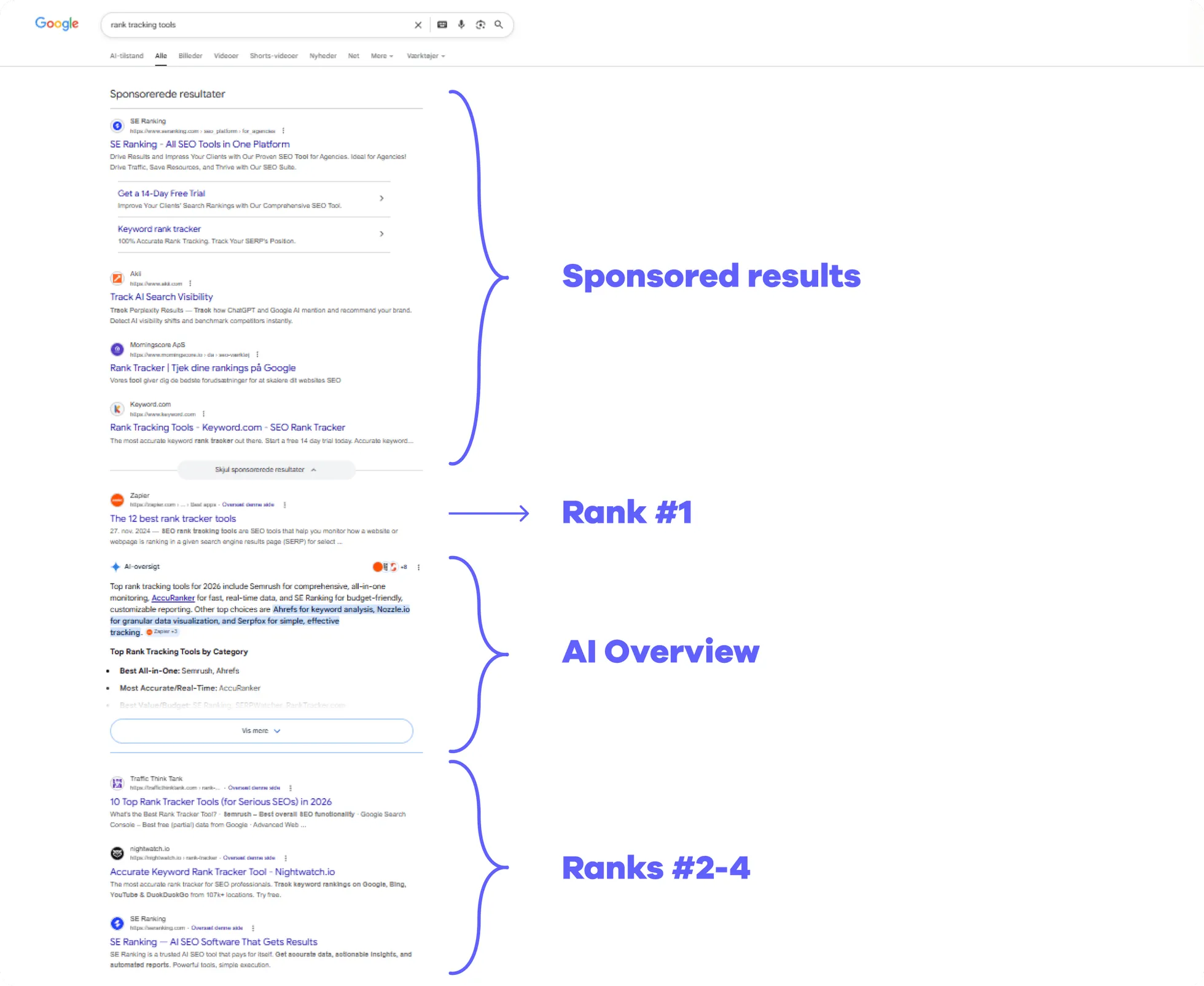
1. You rank #1… somewhere below the fold
Let us talk about what “#1” actually looks like today. You search your keyword and see 3–4 ads at the top, maybe a shopping carousel, or an AI Overview. And then, if you scroll just enough… There you are. Technically #1. Practically invisible.
Ranking #1 does not always mean you appear as the very first thing on the SERP. In some cases, achieving that rank feels like getting your product displayed in the front window, only to realize the blinds are down. Therefore, you should rethink how you prioritize keywords. Not every rank #1 is worth chasing if that position sits below a wall of ads and SERP features.
2. Google answers the question before you even get a chance
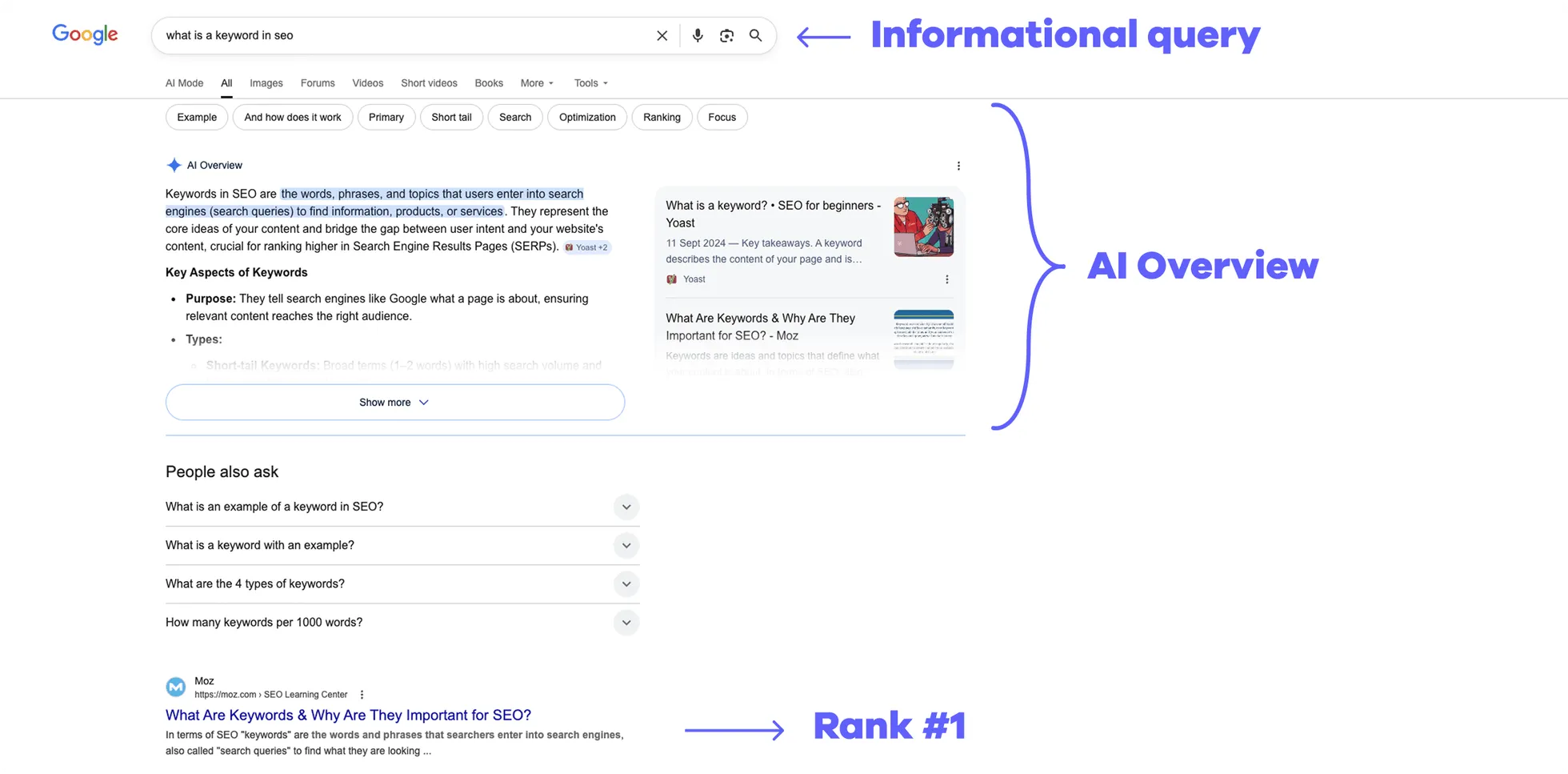
You write a great piece of content that answers a query perfectly. Google agrees and surfaces your content directly in a featured snippet, AI Overview, or knowledge panel that now does the job your page was supposed to do. As a result, users leave the SERP without clicking.
In many cases, the SERP becomes the destination rather than a gateway. However, zero-click searches do not make ranks less important. Strong rankings and quality content are crucial to earning a place in the SERP features that present or summarize published content.
Furthermore, some queries, especially informational ones, are designed to keep users on the SERP, while others drive clicks. That often comes down to search intent. You need to ensure your content fulfills a keyword’s intent to be surfaced in a SERP feature or rewarded with a top ranking. In the end, visibility, in one place or another, is always valuable.
3. Your placement on the SERP is lower than you think
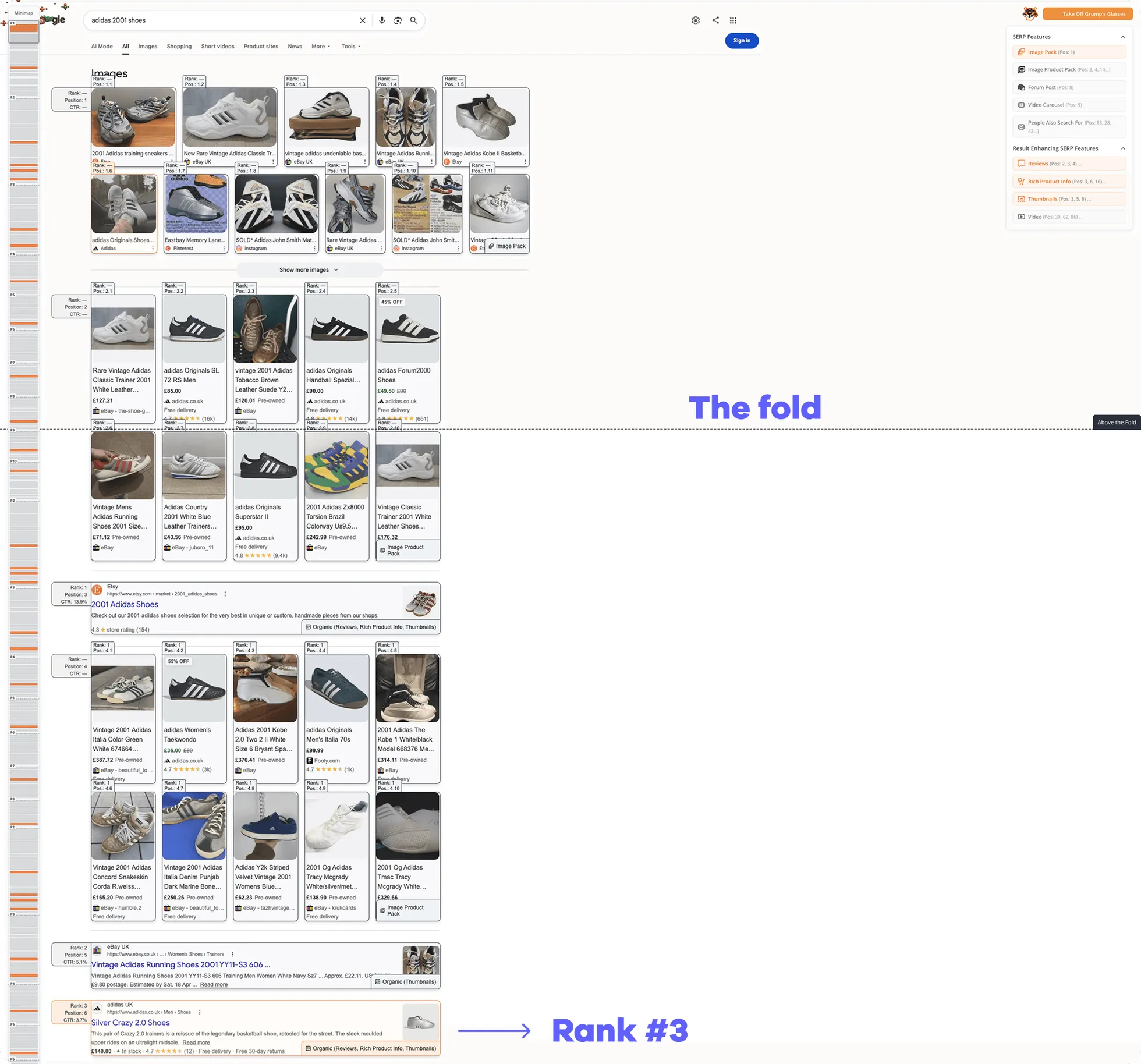
You check your rank: 3, great! But your traffic has not increased. A high ranking does not necessarily mean more traffic, because it says nothing about where you visually appear on the SERP. A rank #3 might sit far below the fold because ads pushed everything down, a snippet took the spotlight, or a video block grabbed all the attention.
So what does a top ranking mean if users never see it? Very little. While you are optimizing for rank, users are reacting to placement. Thus, when you decide what to optimize, consider whether it will move you into a position where users can quickly see and engage with your result.
4. SERP features steal attention before you get it
There was a time when SEO meant competing against blue links. Now, you are wrestling with dozens of SERP features that fight for users’ attention before they even consider clicking an organic listing. Because users do not scan the entire SERP — they interact with what stands out first.
Good ranks are still the entry point to the first page. But once you are on it, you are also battling for attention. This means you need to analyze the SERP before targeting a keyword. Some SERPs still favor organic listings, while others are dominated by features that capture most of the clicks. Figure out where you can win visibility by targeting a better rank or a SERP feature.
How to Measure Real SERP Visibility
If all of this feels frustrating, you are in good company. Most SEOs have stared at rankings and traffic side by side, wondering what went wrong. The problem is that rankings alone cannot explain performance in a changing SERP.
To make sense of your performance, you need to understand how visible your result actually is on the SERP. Here are three ways to do that:
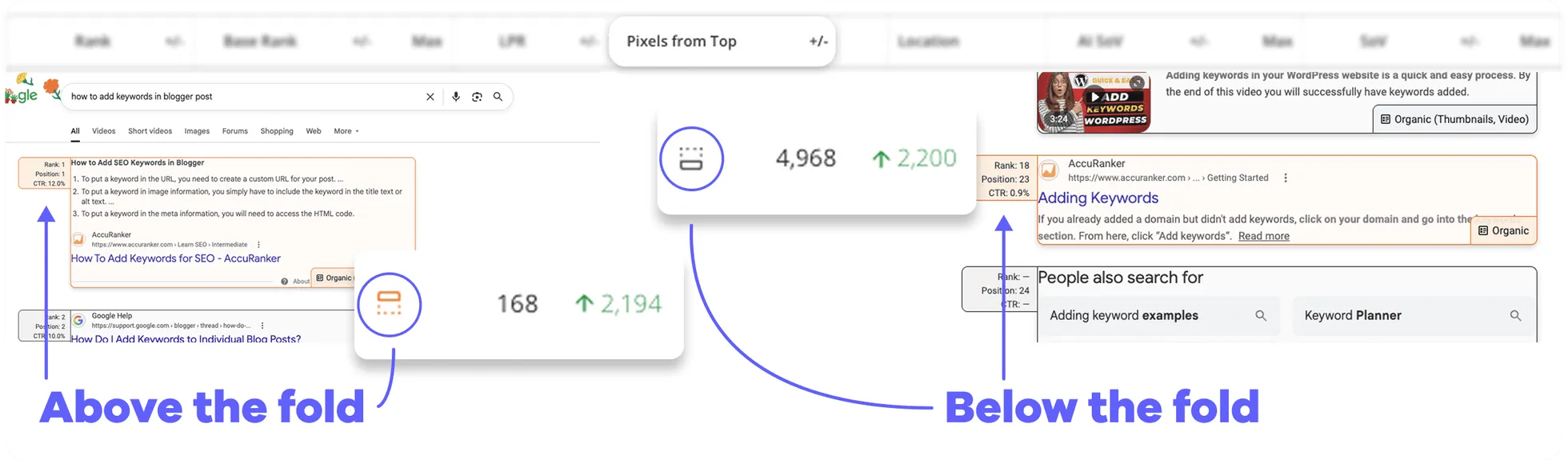
Pixel position: Are you even above the fold?
You need to know exactly where your result appears on the screen. Not rank 1 or rank 2, but your actual placement on the SERP. It helps you understand what users see and click. For this, you need pixel tracking, which shows you exactly how far down your result is on the SERP.
Pixel tracking answers questions like whether your result is above the fold, how far users need to scroll to see your page, and how much space SERP features take up. Pixel position is often the missing link between ranking well and still not getting traffic. It can show you that your top ranking was technically correct, but SERP features visually buried it, causing you to lose clicks.
SERP feature tracking and SERP view: What are you competing against?
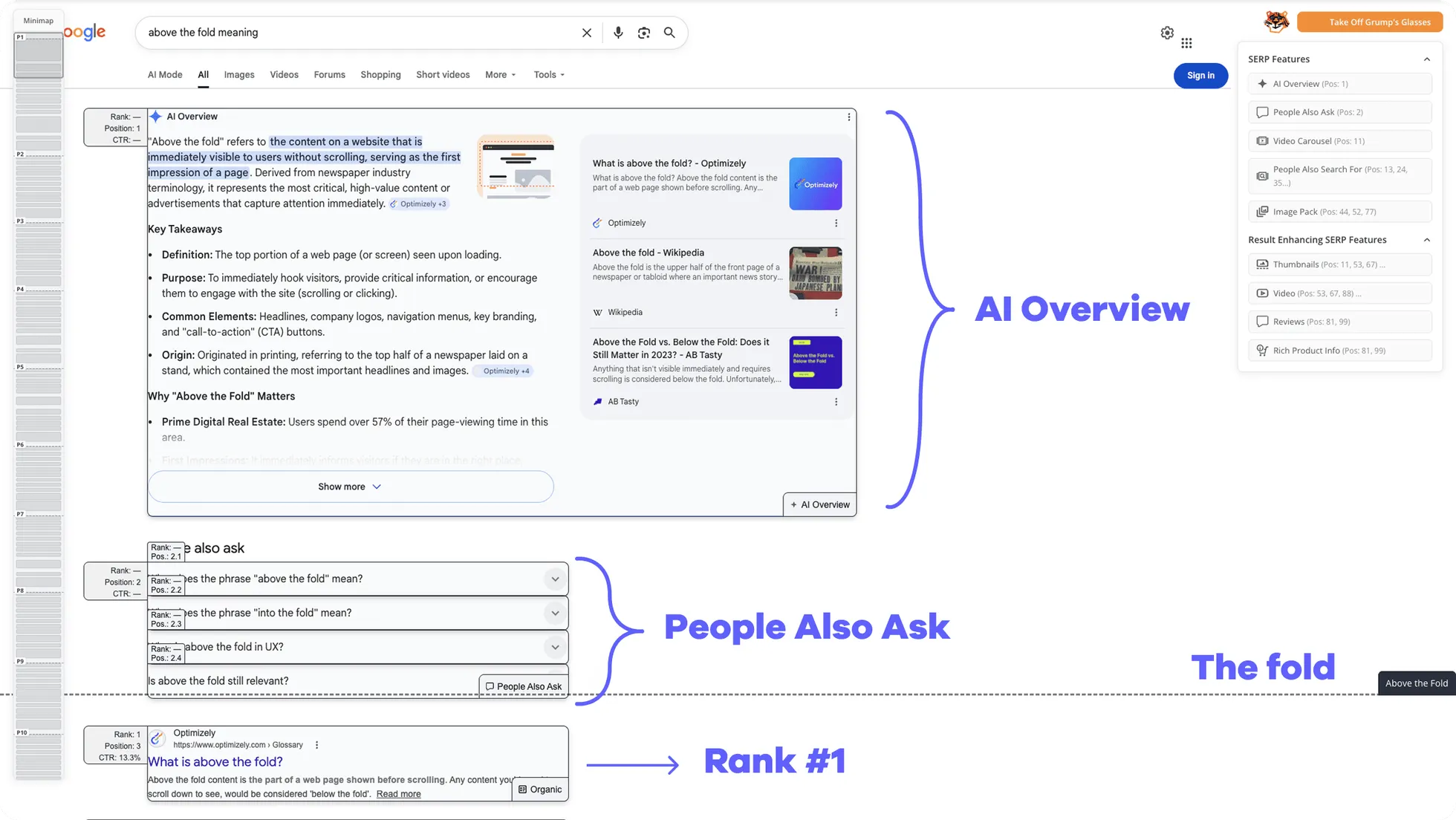
Knowing your pixel position is one step in the right direction. But you also need to understand what surrounds you on the SERP, because your SEO performance is shaped just as much by everything else on the page.
When you track SERP features, you start to see patterns. You notice which keywords are dominated by ads, where AI Overviews appear, and when product listings take over. More importantly, you can see whether you own any of those features or whether they are all working against you.
Looking at the actual SERP for a keyword is also critical, as it helps you understand what users see and where you are. This analysis helps you explain why rankings stay stable while traffic drops. The answer is usually right there on the page.
Dynamic CTR: What is your ranking actually worth?
CTR is not predictable and never has been. It depends on what appears on the SERP, how much space each element takes up, and the query’s search intent. That is why the assumption that “rank 1 gets 30% of clicks” does not hold. Sometimes it gets 75%. Sometimes it gets 5%. Sometimes it gets ignored completely.
Instead of relying on static averages, you need a dynamic CTR that adjusts based on the SERP layout. One that reflects how users interact with what they see, not what ranks suggest. This way, you can prioritize the right keywords, explain performance more accurately, and avoid overestimating the impact of rankings that look strong on paper but are weak in practice.
Factors Affecting Click-Through Rate in Organic Search
We analyzed 1.3 billion SERPs...Get the white paper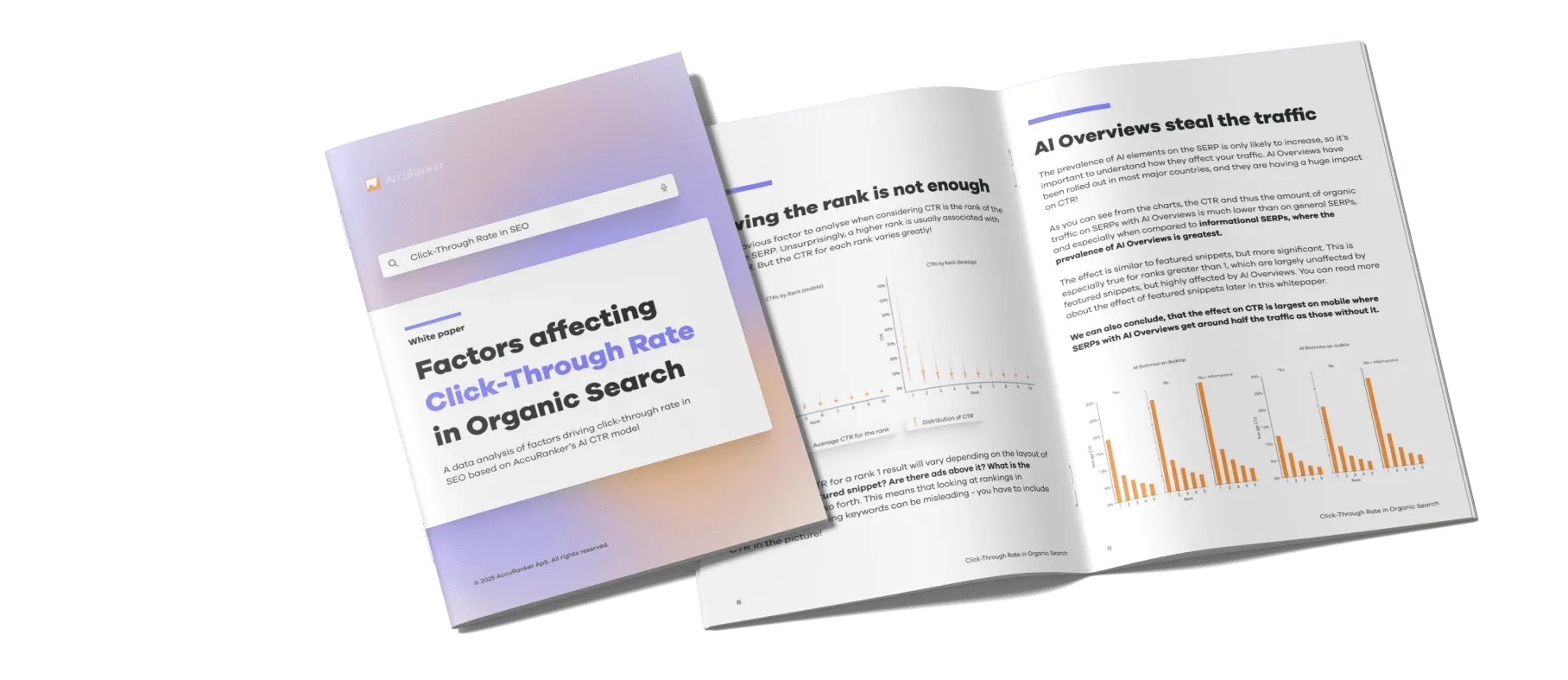
Ranks Still Matter, But Visibility Has Evolved
SERPs that constantly change do not mean you should abandon your ranks. They are still the foundation of everything you do and should remain so, because they are critical to gaining visibility and competing in search.
But in a SERP filled with ads, snippets, and grids, knowing how you appear is just as important. Instead of focusing only on traditional organic listings, you should also aim to be present in the dominant SERP features. This way, you can maintain visibility no matter how the SERP looks.
Because the SERP will keep changing. New features will appear, others will expand, and the space available for organic listings will continue to change. So make sure you stay visible no matter how it evolves.
Related blog posts

AI Overviews Are Taking Over SERPs
From traffic drops to decreasing CTRs, AI Overviews are shaking up SEO. Learn what is happening and how AccuRanker helps you track AIO.
25 June 2025
Why Your CTR Model Is Betraying You
A static CTR model relies on fixed averages. AccuRanker's dynamic CTR model accounts for 120+ factors to calculate a keyword's expected CTR.
2 June 2026
Introducing AccuRanker’s Full SERP Report
The full SERP report shows you the entire SERP for up to 1,000 keywords across all positions, making it easy for you to start your SERP analysis.
5 May 2025